Kyudo History
弓道の歴史
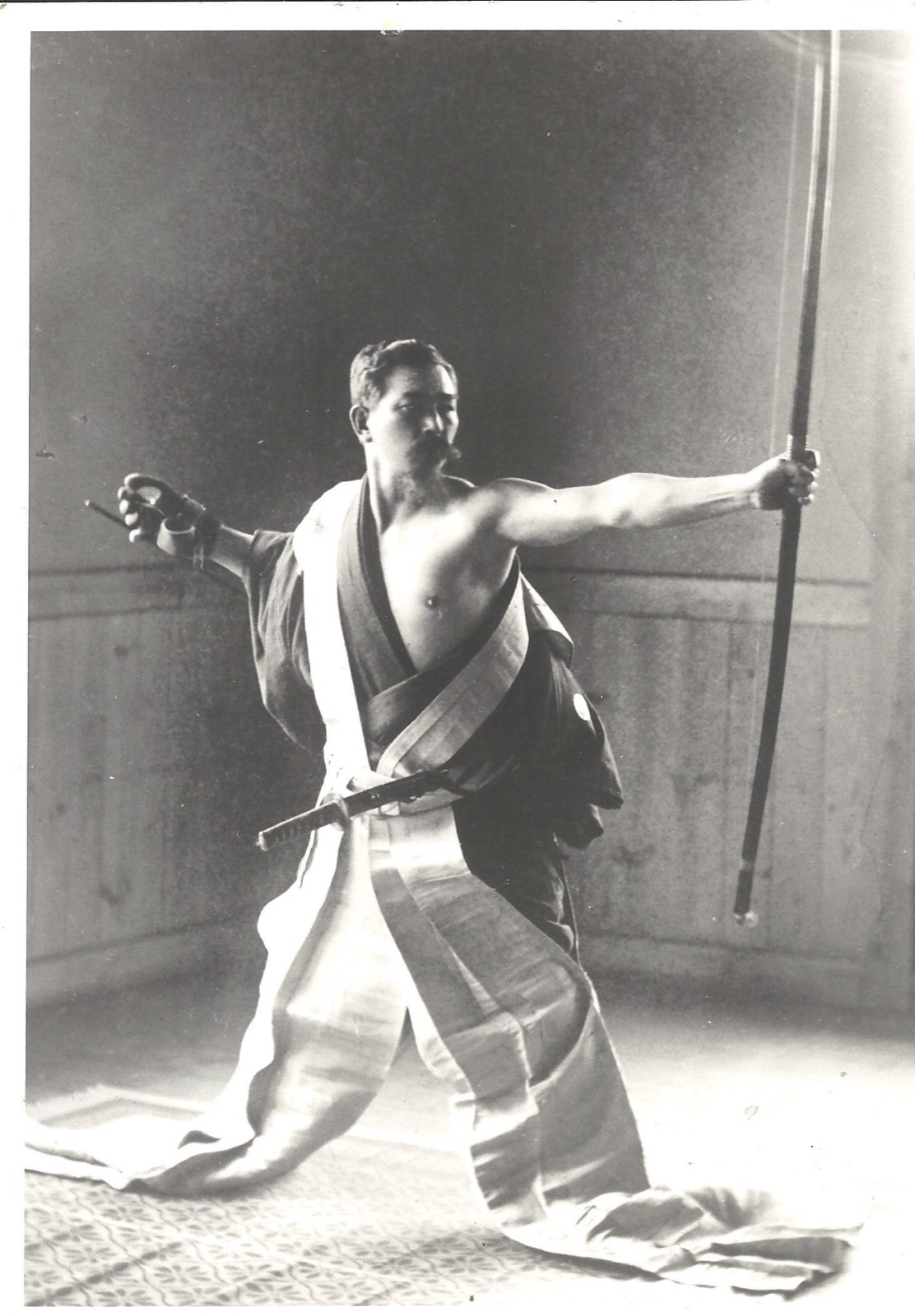
Awa Kenzo- An original member of Dai Nippon Kyudo kai
The beginning of archery in Japan is pre-historical. The first images picturing the distinct Japanese asymmetrical longbow are from the Yayoi period (c. 500 BC – 300 AD).
日本における弓術の始まりは、先史時代に遡ります。日本独特の非対称の長弓を描いた最初の画像は、弥生時代(紀元前500年頃〜西暦300年)のものです。
Emergence 発祥
The changing of society and the samurai class taking power at the end of the Heian period (794-1185) created a requirement for education in archery. This led to the birth of the first kyūjutsu ryūha (流派, style), the Henmi-ryū (逸見流), founded by Henmi Kiyomitsu (源清光) in the 12th century. The Takeda-ryū (武田流) and the mounted archery school Ogasawara-ryū (小笠原流) were later founded by his descendants. The need for archers grew dramatically during the Genpei War (1180–1185) and as a result the founder of the Ogasawara-ryū (Ogasawara Nagakiyo), began teaching yabusame (mounted archery).
平安時代(794年―1185年)末期に武士階級が権力を握ったことで、12世紀には弓術教育の必要性が生まれ、弓術初期流派(逸見清光により逸見流)が創始された。のちに武田流や弓馬術を含む小笠原流は逸見流に基づく流派として誕生する。源平合戦(1180年~1185年)で弓兵の必要性が飛躍的に高まり、小笠原流の祖・小笠原長清が流鏑馬(やぶさめ)を教え始めた。
Sengoku period 戦国時代
From the 15th to the 16th century, Japan was ravaged by civil war. In the latter part of the 15th century Heki Danjō Masatsugu revolutionized archery with his new and accurate approach called hi, kan, chū (fly, pierce, center), and his footman's archery spread rapidly. Many new schools were formed, some of which remain today, such as Heki-ryū Chikurin-ha (日置流竹林派), Heki-ryū Sekka-ha (日置流雪荷派) and Heki-ryū Insai-ha (日置流印西派).
15世紀末から16世紀末にかけて、日本国内は戦乱が頻発した時代(戦国時代)であった。15世紀後半、日置弾正政次は「飛・貫・中」の悟りを開き、近世射術の基礎を築いた。日置流の影響は非常に強く、日置流の系譜に連なる流派には日置流竹林派、日置流雪荷派や日置流印西派などが挙げられる。
16th century 16 世紀
The yumi (Japanese bow) as a weapon of war began its gradual decline after the Portuguese arrived in Japan in 1543 bringing firearms with them in the form of the matchlock. The Japanese soon started to manufacture their own version of the matchlock called tanegashima and eventually it and the yari (spear) became the weapons of choice. However, because tanegashima took a long time to load, were inconvenient in rainy weather when damp gunpowder would not fire, and were not exactly subtle in terms of noise, the yumi did not go out of fashion and continued to be used as an important military force on the battlefield. The tanegashima however did not require the same amount of training as a yumi, allowing Oda Nobunaga's army consisting mainly of farmers armed with tanegashima to annihilate a traditional samurai archer cavalry in a single battle in 1575.
1543年に種子島に漂着したポルトガル人による鉄砲(火縄銃)伝来・普及に伴い、弓は徐々に衰退を始める。日本製の火縄銃は、最初の製銃地となった種子島(銃)の名とともに全国に広まり、槍と共に主流の武器となる。しかし、種子島(銃)は装填に時間を要し、雨天時には湿った火薬が発射されず不便で、発砲音もものすごかったため、弓は完全に廃れることなく、戦場で重要な戦力として使われ続けた。
種子島(銃)の不利な構造にもかかわらず、弓と比べて訓練の必要がなかったため、1575年、種子島(銃)で武装した農民を中心とする織田信長の軍隊は、武士の弓騎兵を一度で全滅させることができた。
Edo period 江戸時代
During the Edo period (1603–1868) Japan was turned inward as a hierarchical caste society in which the samurai were at the top. There was an extended era of peace during which the samurai moved to administrative duty, although the traditional fighting skills were still esteemed. During this period archery became a "voluntary" skill, practiced partly in the court in ceremonial form, partly as different kinds of competition. During this period, an archery contest called Tōshiya was popularly held at the Buddhist temple Sanjusangen-do. Many samurai competed to hit an arrow at a target 133 meters away, nearly the width of the Buddhist temple. Today, this Tōshiya contest is held as an annual event on Coming-of-Age Day, January 15, with women archers participating, but with the distance to the target shortened to 60 meters.
. 江戸時代(1603年―1868年)、日本は武士を頂点とする身分制度の支配下にありました。江戸時代は長期にわたり戦争の無い穏やかな時代であり、武士は行政事務に従事するようになったが、伝統的な戦闘技術は尊重され続けた。戦国時代とは異なり、江戸時代以降、弓道は武士の体力・精神力を競う行事として栄え、京都の三十三間堂で本堂西側の軒下(長さ約 121 m )を、南から北に矢を射通す「通し矢」の競技が盛んに行われた。現在、「通し矢」は例年1月15日の成人の日に開催され、的までの距離は60メートルに短縮された形式で、新成人の女性も華やかな晴れ着姿で矢を放ちます。
In the early Edo period, Morikawa Kōzan founded the Yamato-ryū (大和流), which was based on Ogasawara-ryū etiquette and Heki-ryū shooting methods, and also incorporated Shinto ideas.
江戸時代初期、森川香山は小笠原流の礼法、日置流の射法と神道の教えを織り交ぜた大和流弓術を創始する。