Frequently Asked Questions
Please use Google translate to view the page in your language.
What is Yosoku Ryu? よそく流とは?
Yosoku is the term originally created by the Dai Nippon Butoku Kai in 1936 to describe the unified/mixed style of shooting. Some may also call this “renmei” style of shooting. Yosoku Ryu is the official term to describe this mixed type of shooting style.
Why was DNKK revitalized?
大日本弓道会(DNKK)復興のきっかけは何ですか?
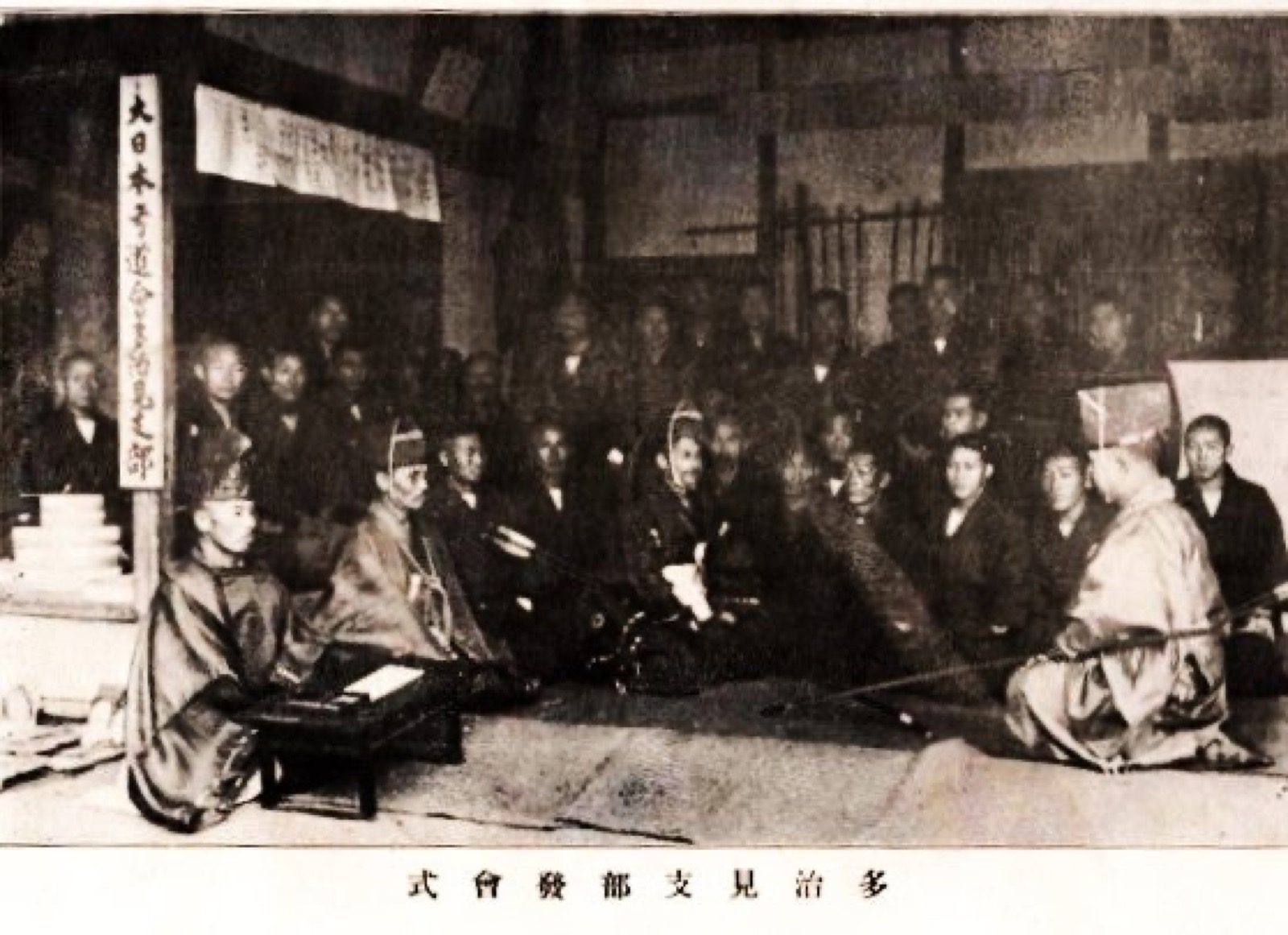
The original Dai Nippon Kyudo Kai was dissolved in 1945. Although the modern DNKK is not the identical legal organization, kyūdōka from Japan, Europe, and the United States came together with the desire to continue its name, spirit, and broader mission in a contemporary form.
The reason for revitalizing DNKK was to bring back an important historical spirit of kyūdō while establishing a new non-profit organization in Japan that reflects the needs of today’s practitioners. The original founder, Rokuji Neya, stated that he was “determined to use the bow to do something for society.” The modern DNKK seeks to continue that belief by making kyūdō more accessible, reducing unnecessary costs, welcoming multiple styles of kyūdō, and offering kyūdōjin another meaningful option in their training journey.
DNKK was revitalized to promote mutual understanding, international cooperation, and partnership among members in Japan and other countries. It also seeks to use modern technology and innovation to support training, update the examination process, and facilitate kyūdō education with new values and perspectives.
1. The use of modern technology in training
稽古における近代技術の使用
Technology plays an important role in modernizing and improving training methods. It allows students and instructors to use tools such as online learning platforms, remote instruction, video review, real-time feedback, digital resources, and video analysis. These tools can help make training more efficient, personalized, and accessible.
By using technology, DNKK can support students who may not have regular access to senior instruction, who live far from established dōjō, or who cannot afford the significant costs of travel, lodging, and transportation. Technology does not replace traditional in-person training, but it can strengthen and expand access to kyūdō education.
2. Updating the testing process
審査方法の更新
DNKK has updated the shinsa process by making examinations available online at qualified 28-meter ranges. Shodan and Nidan examinations may be submitted by pre-recorded video. Sandan and Yondan examinations are conducted by live stream. Godan, Renshi, and higher-level examinations are required to be conducted in person.
This approach helps keep examination costs low while making testing more accessible, especially for kyūdōka in economically developing countries or regions without easy access to senior examiners. Testing remains optional, and each examination level includes specific and rigorous guidelines. Candidates also receive feedback on their performance.
Because initial video-based examinations require clear visual review, the guidelines are intentionally specific and strict. This helps maintain standards while allowing different styles of kyūdō to be evaluated without forcing practitioners to conform unnecessarily to another group’s testing method.
3. Facilitating kyūdō education
弓道教育の促進
DNKK is open to all styles of kyūdō through appropriate divisions. It is not restricted to only one method, lineage, or practice approach. DNKK believes that kyūdō should be available to everyone regardless of economic condition, association membership, nationality, or disability.
In Japan, many kyūdōka belong to more than one group and cross-train. DNKK respects that reality. Its purpose is to facilitate technical training and kyūdō education. Unless specific advice is requested, DNKK does not involve itself in the internal operations of individual dōjō.
4. Technical specialist and instructor pathways
技術専門家と指導者の二つの道
DNKK also recognizes that not every practitioner wishes to follow the instructor path. Some kyūdōka may prefer to become highly skilled technical specialists rather than formal teachers. Technical ability and teaching ability are related, but they are not the same skill set.
For this reason, DNKK has separated training into two pathways: Technical Specialist and Instructor. This allows practitioners to pursue the role that best fits their goals, personality, experience, and contribution to kyūdō. Both paths are valuable, and both can strengthen the future of kyūdō.
In summary, DNKK was revitalized to preserve the spirit of the original organization while creating a modern, accessible, internationally cooperative, and educationally flexible organization for today’s kyūdō community.
What is DNKK’s relationship with its affiliated dōjō and organizations?
DNKK follows a collaborative approach built on three principles:
- Local autonomy: Affiliated dōjō and organizations retain their own independence, identities, leadership, and control over their internal affairs. Affiliation is a partnership grounded in mutual respect and a commitment to DNKK’s shared technical and ethical standards.
- Mission over uniformity: We value a shared dedication to practicing, preserving, and developing kyūdō while respecting differences in names, structures, and local traditions. We welcome people who think like entrepreneurs, explore ideas outside the box, and bring the drive and creativity to advance our common mission.
- Coordination through collaboration: DNKK brings members together through instructor support, examinations, shared learning, and international exchange. Leadership serves the membership by listening, offering guidance, and helping members turn ideas into action.
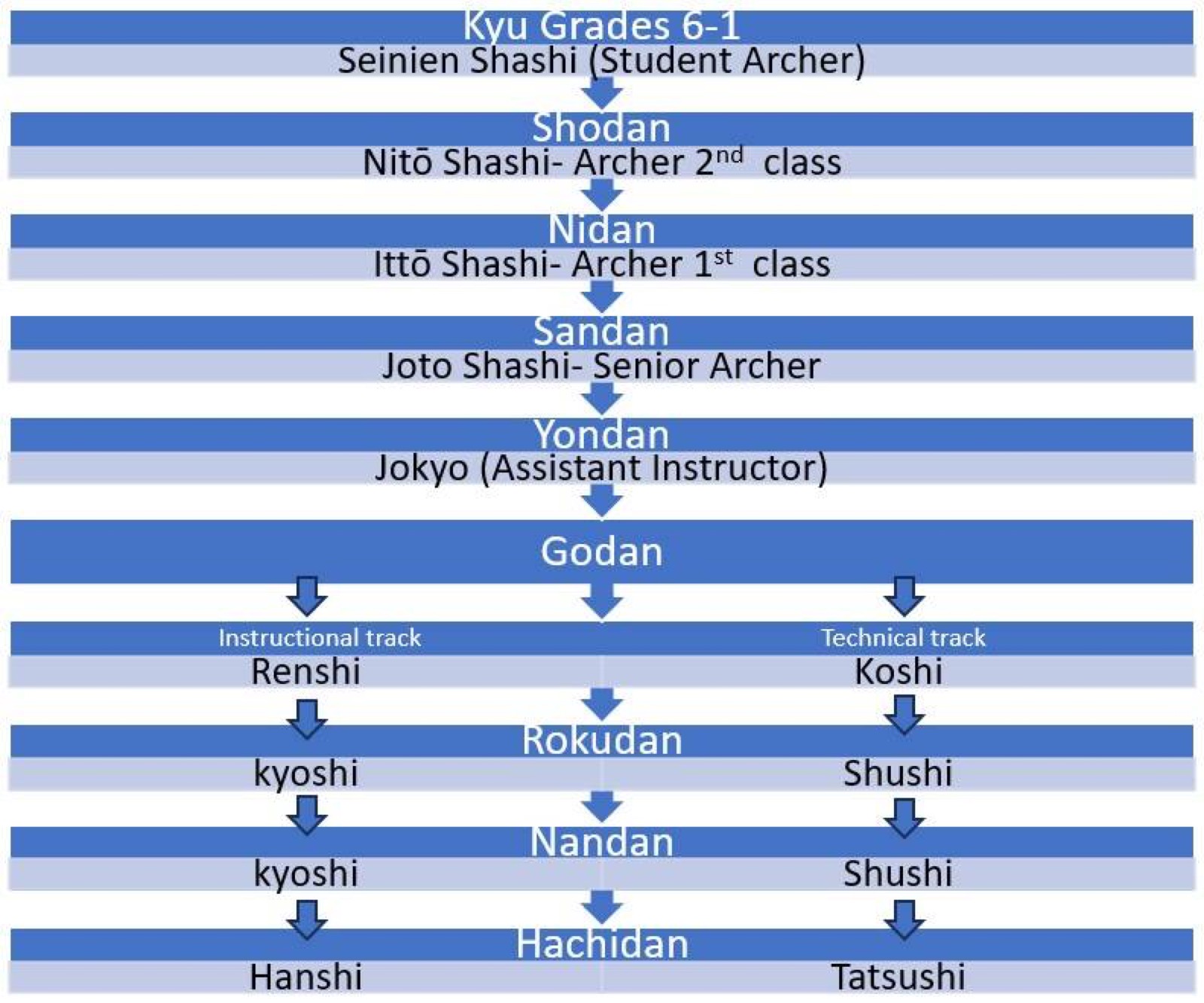
Specialists:
- Master the lexicon of Kyudo
- Understand Kyudo essential questions
- Find answers to those questions
- Convey their answers for other experts and teachers
- Written technical examination at Godan and above - no sharei
- Focus on one style of kyudo, kyujutsu and/or competitions
Instructors:
- Understand the lexicon and essential questions of their discipline
- Engage their specific community of learners
- Adapt essential resources for their communities
- Invite learners along a path to new levels in their discipline
- Verbal examination at Godan and above with sharei focus
- Pedagogical coursework and teaching evaluation
Is DNKK recognized? 大日本弓道会(DNKK)は認可されていますか?
Yes. We have been recognized by the Government in Tokyo as an Ippan Shaden Hojin (General Incorporated organization #0111-05-010954) with the following authorization:
はい。
"The organization will help facilitate kyudo to students internationally and bring enjoyment and enrichment to cities and countries that have yet to experience Japanese archery. For that purpose, the organization shall engage in the following activities:
(1) Business related to the promotion and dissemination of kyudo and other Japanese culture;
(2) Workshops and courses on kyudo and other Japanese culture;
(3) Businesses related to the regional development of kyudo, including the management of schools promoting such regional development and the education, examination and certification of ranks and titles to individuals engaged in kyudo and;
(4) Any and all business activities other than the foregoing items as required to achieve the objectives of the organization."
What are the specific shinsa guidelines? How will it work?
具体的な審査基準と審査方法について
The DNKK shinsa process is designed to be rigorous, fair, accessible, and appropriate for multiple styles of kyūdō. The testing requirements and rank qualifications may be viewed through the official testing requirements link below. These requirements have been developed so that they can fit most kyūdō styles and be incorporated into regular training without requiring practitioners to abandon their existing method, lineage, or dōjō practice.
1. Examination format
審査形式
DNKK examinations may be conducted through one of the following formats, depending on rank level:
Shodan and Nidan: Pre-recorded video submission may be accepted.
Sandan and Yondan: Live-streamed examination or in-person is required.
Godan, Renshi, and above: In-person examination is mandatory.
Shogo/title evaluations: Conducted in person in Japan or at a qualified international 28-meter range.
All video or live-streamed examinations must be conducted at a qualified 28-meter range and must follow the specific recording, safety, attire, etiquette, and performance guidelines for the level being tested.
2. Independent judging process
独立した審査方法
Japanese and international shinsa judges assigned to the candidate’s division will review the examination independently. Each judge will make an individual decision based on the candidate’s technical performance, etiquette, safety, rank qualifications, and applicable written or oral requirements.
The judges’ decisions will then be submitted to the shinsa coordinator. A positive consensus among the judges will result in promotion. If consensus is not reached, the candidate may receive feedback and may be asked to continue training before retesting.
3. Basis for promotion
昇段・昇格の判断基準
Promotions are not based solely on shooting performance. DNKK promotion decisions may consider the following:
Documented technical ability
Years of practice
Etiquette and character
Safety and discipline
Written or oral examination results
Teaching ability, where applicable
Service to the organization
Contribution to the preservation and transmission of DNKK kyūdō
All promotions must be recorded in the official DNKK registry and confirmed by resolution of the Board of Directors.
4. Rank requirements and test questions
段位要件および試験問題
Each rank has specific technical, written, and qualification requirements. Test questions and rank qualifications are listed in the official requirements chart. Candidates should review these requirements carefully before applying.
The written or multiple-choice portions of the examination are intended to confirm that the candidate understands the principles, etiquette, terminology, safety rules, history, and technical concepts appropriate to the rank being tested.
5. Shogo and teaching qualifications
称号および指導資格
Individuals applying for a Teacher Shogo title must complete additional leadership, ethics, and pedagogical training to supplement their technical kyūdō training. These courses may include subjects such as instructional method, student safety, ethical leadership, organizational responsibility, and teaching practice.
Many acceptable courses are available online, including free courses through Coursera or similar educational platforms. A certificate of course completion must be submitted as part of the completed Shogo application.
This requirement may be waived if the candidate has a college or university degree, professional certification, or direct work experience in a relevant field such as education, leadership, ethics, coaching, public administration, organizational management, or a related discipline.
Shogo testing and in-person teaching evaluation will take place in Japan or at a qualified 28-meter range internationally.
6. Shogo is connected to rank level
称号は段位に関連するもの
In keeping with broader budō organizational standards, a Shogo title is not treated as a completely separate rank. A candidate may test for the appropriate dan level and apply for the corresponding Shogo title at the same time, provided that the candidate meets all technical, written, teaching, ethical, and service requirements.
At Godan level and above, wearing a tantō or wakizashi with kimono is optional and may be recognized as part of formal appearance and tradition, but it is not required unless otherwise stated for a specific event or examination.
Shogo certification may also be available at the 2nd through 4th Dan level under the Archer classification, as described in the official rank chart. Each dan rank may include an in-person multiple-choice test and documented assistant teaching hours appropriate to that level.
7. Teaching pathway and documented hours
指導者課程および指導補助時間
Candidates seeking instructor recognition must provide documentation of teaching or assistant teaching experience. The required number of hours depends on the level being tested. These hours may include supervised instruction, assisting beginners, leading warm-ups, safety supervision, equipment instruction, etiquette instruction, range setup, or other approved teaching-related duties.
Technical skill and teaching ability are evaluated separately. A candidate may be technically skilled without yet being qualified to teach. Likewise, instructor recognition requires not only personal skill, but also judgment, communication ability, safety awareness, humility, and the ability to guide others responsibly.
8. Promotion authority
昇段・昇格の権限
Promotion authority shall be exercised by the Board of Examiners, the Technical Committee, the Title Committee, or such other officers as may be appointed by the Board of Directors.
All promotions shall be based on documented technical ability, years of practice, teaching ability where applicable, character, service to the organization, and the organizational need to preserve and transmit DNKK kyūdō.
All approved promotions shall be entered into the official DNKK registry and confirmed by resolution of the Board of Directors.
9. Purpose of the DNKK shinsa system
DNKK審査制度の目的
The purpose of the DNKK shinsa system is to maintain high technical standards while making kyūdō education and advancement more accessible to practitioners in Japan and internationally. The system is intended to respect different styles of kyūdō, reduce unnecessary financial barriers, provide meaningful feedback, and ensure that each promotion reflects genuine training, character, and contribution to the art.
DNKK does not require practitioners to abandon their current dōjō, association, or style. The goal is to provide an additional path for serious kyūdōjin who wish to continue their development through a modern, accessible, and internationally cooperative organization.
Itto Shashi (Nidan)- Archer 1st class: 20 documented assisting teaching hours and 20 technical multiple choice questions.
Joto Shashi (Sandan)- Senior Archer: 30 documented mix of both independent and assisting teaching hours.
Jokyo (Yondan)- Assistant instructor: 40 documented independent teaching hours.
If we are in the same country/state, are we under another school?
同じ国にいる場合、他の道場や団体の下に置かれますか?
No. DNKK does not automatically place one school, dōjō, or training group under the authority of another simply because they are located in the same country.
Each recognized dōjō or training group remains independent and autonomous in its daily operations, teaching environment, and internal management. The relationships that members and dōjō maintain with one another within the same country or state should be based on mutual respect, cooperation, and a shared commitment to the study and preservation of kyūdō.
DNKK is not intended to function as a rigid military-style hierarchy, nor does it support political rivalry, personal ego, or “kingdom building.” No dōjō is expected to be subservient to another. DNKK will not involve itself in the internal affairs of a dōjō unless assistance, mediation, or guidance is specifically requested.
Rather, DNKK operates as a coalition of kyūdōka, dōjō, and instructors working together toward common goals: responsible training, accessible education, technical development, mutual understanding, and the continued transmission of kyūdō.
DNKK includes kyūdōka from different countries, backgrounds, and styles. Coordinators may be appointed to assist with membership, communication, annual training opportunities, education, and testing; however, their role is to support cooperation, not to control independent dōjō.
Every recognized Dōjō-chō will have an opportunity to provide input into the direction and development of the organization.
For membership questions or assistance, please contact:
Coordinator@DaiNipponKyudoKai.org
Can we belong to other kyudo organizations and the DNKK?
Yes. The DNKK does not prevent you from being part of other groups.
How will bias be prevented in examinations?
審査の公平性はどのようにして保たれていますか?
Most often the judges grading your exam will not know who the other judges are, therefore, they will not be influenced one way or another by your performance. If there is a possible conflict of interest with someone who you know to be a judge, then your evaluation will be sent to another individual.
Will you accept my rank from another kyudo organization?
Yes. If your certificate is from a verifiable kyudo lineage/organization, then members can test for promotion.
Helpful information and Links:
Kyudo equipment is expensive and has been a problem in the past? Is this still going to be an issue?
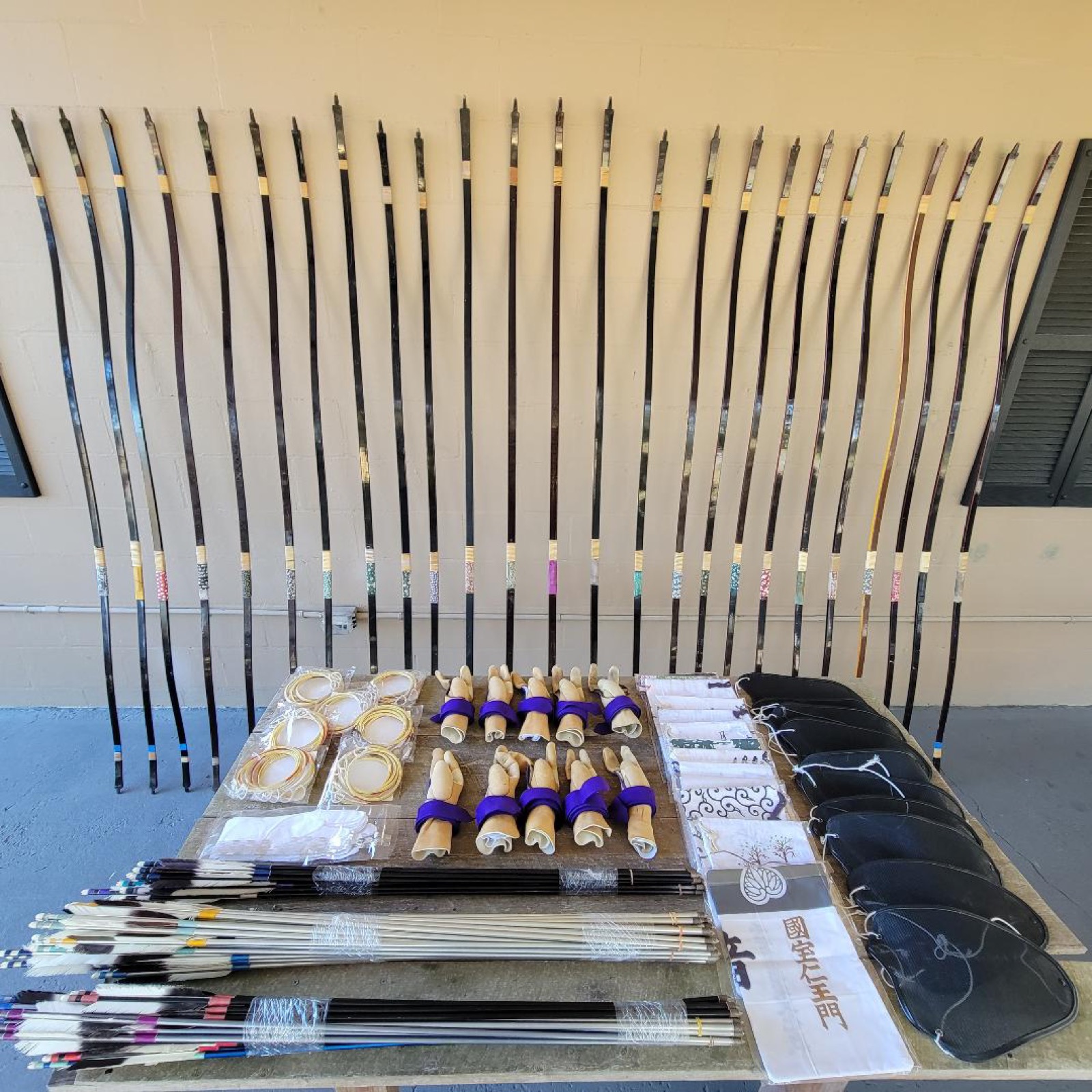
No. We have various partners who have donated used and new kyudo equipment to the organization to be given to member clubs. Furthermore, if there is something that is lacking, the DNKK will purchase it for your group as needs arise. Priority will be given to countries with the most economic need. Shipping cost will be the responsibility of the receiver. In 2023, we donated $30,000 USD in kyudo equipment and expenses to Cuba. (photo)
Please see links below to order equipment.
Female kyudo uniform
Male kyudo uniform
General equipment
How do we get free equipment?
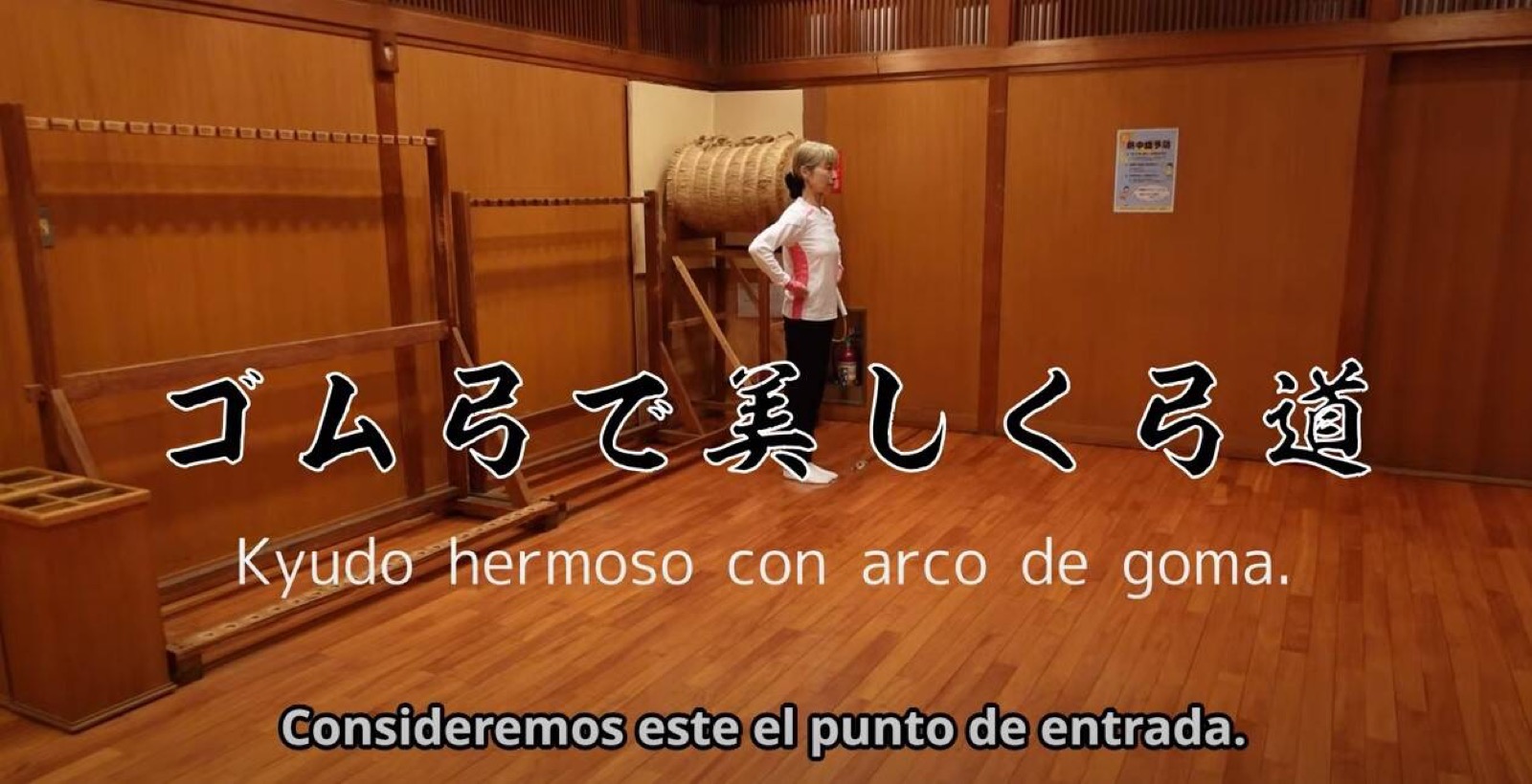
Schools that cannot afford Japanese bows and wish to have Yumi donated to their club will need to start with Gomi-Yumi (Rubber Bow). The Gomi-Yumi can be easily made from recycled materials in your area. See links below.
Once your members have shown devoted practice and proficiency with the Gomi Yumi at the shodan level, then your school will qualify for kyudo equipment. Priority will be sent to the developing countries according to IMF. (see link above)
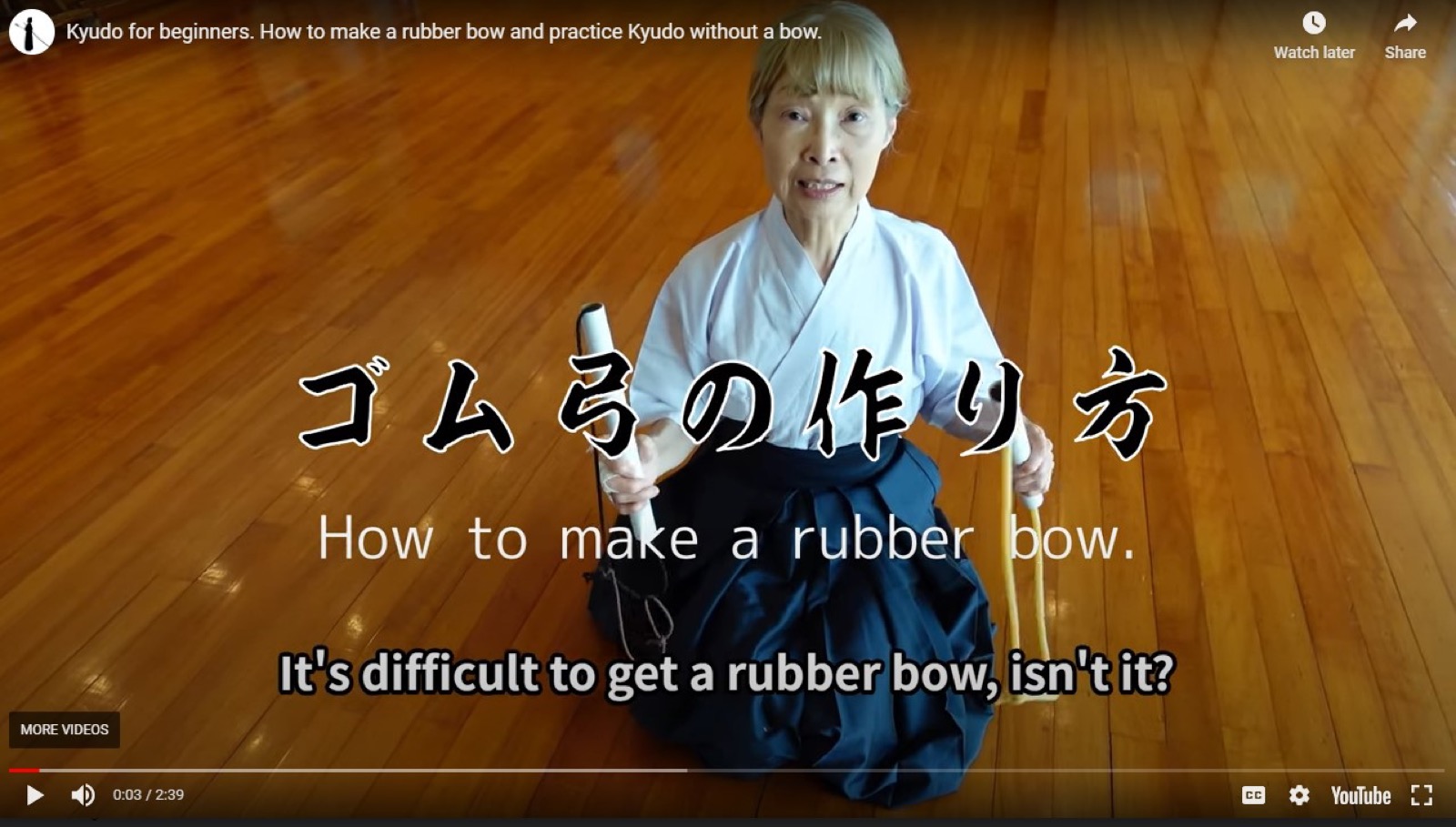
How to practice with Gomi Yumi at Shodan level with our Yosoku Education Director Miyako Sensei.
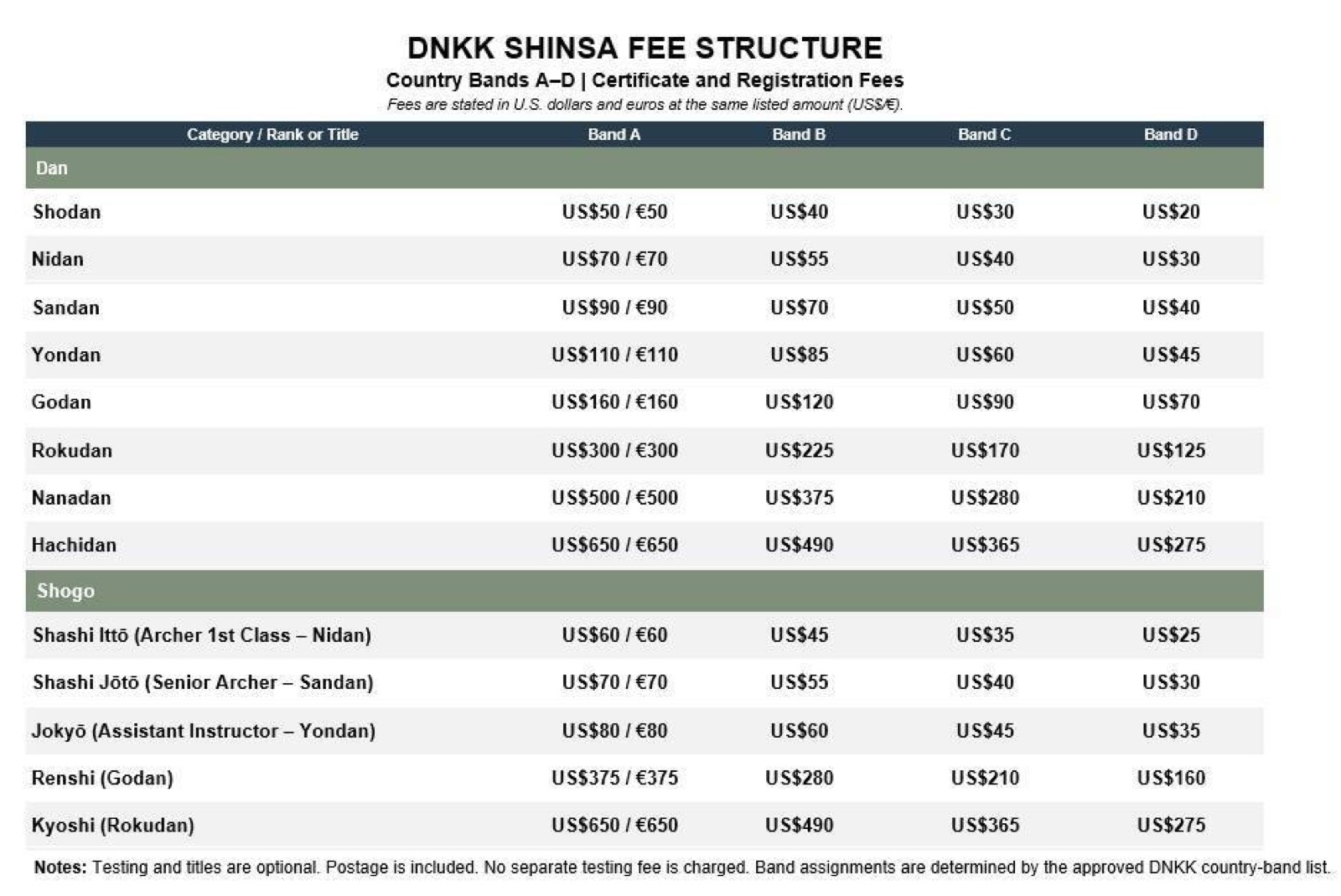
What are the ranking and membership fees?
As we are a non-profit, fees are kept to an absolute minimum and relative to your country. The cost for yearly membership are as follows:
A Band countries are:
Kyu Rank: $20
Dojo Cho: Free
Yudansha or equivalent: $30
B-D band countries are:
Kyu Rank: Free
Dojo Cho: Free
Yudansha or equivalent: $15
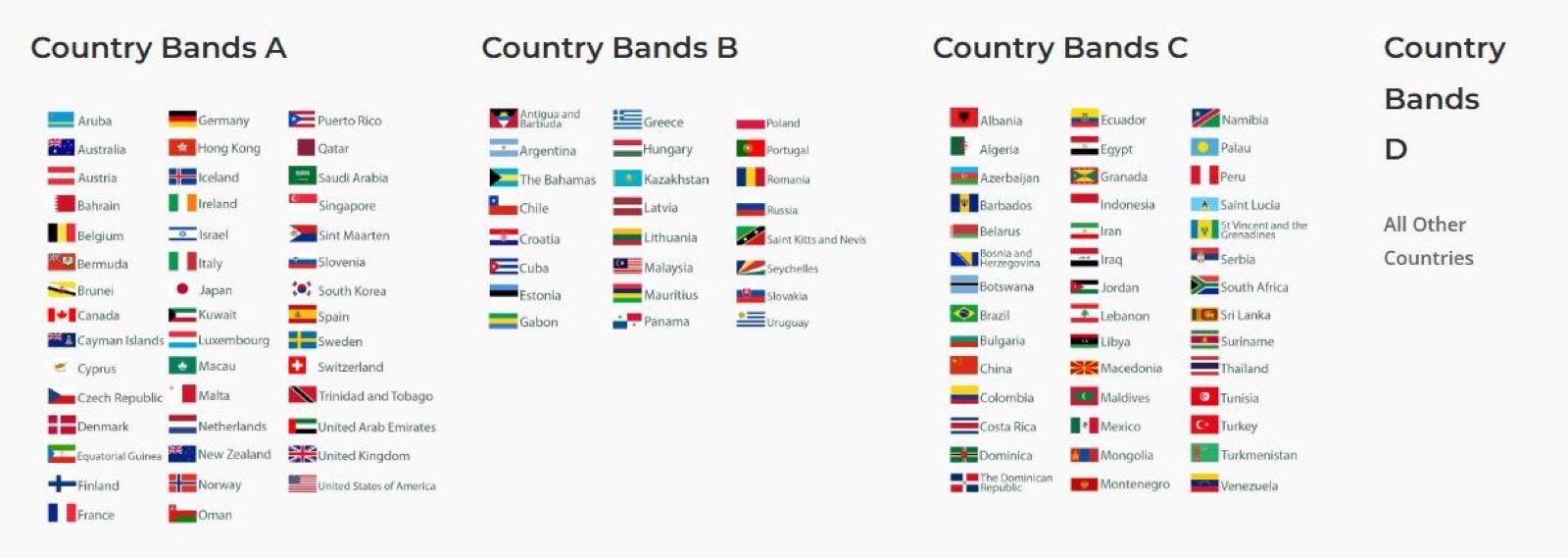
Check your country band below for relative fee.
Can dojo-cho provide kyu ranking?
道場長は昇級審査を行うことができますか?
Yes, kyu ranking can be done at the dojo level and is at the discretion of the instructor. In the spirit of non-profit, kyu fees should also be kept at an absolute minimum or free in accordance with your country’s laws. Guidance on kyu ranking in your art can be found on the testing guideline form.
Can a dojo receive a Dojo membership certificate?
Yes, Dojos/Study groups can receive a certificate once they have at least 3 registered members other than the dojo cho.
Can the range I take my exam at be less than 28 meters if we size the mato (target) smaller in relation to the distance?
距離に対して的の大きさを小さくすれば、28メートル以下の射程距離で審査を受けてもいいですか?
No. The arrow itself must fly a full 28 meters. Sizing the mato smaller so that the sight picture is the same as a regular distanced mato does not count as the arrows reaching full distance. Arrows that hit or scrape the ground yet reach the floor of the target bank or bounce up do not count.
Where can I order patches /uniforms/Equipment:
- Patches can be ordered at here
- Womens Kyudo Uniforms can be ordered here
- Mens Uniforms can be ordered here
- Kyudo equipment here
What is the difference between Bushakei and Reishakei?
Bushakei- (warrior shooting style) Usually wears 3 finger glove (mitsugake)
- Pinches and hides tips of arrows in hand
- Takes 2 steps ashibumi (Nisoku) then looks at target then feet to take ashibumi
- Two steps to load the hiya
- The otoya is held between the middle finger and the ring finger
- The otoya is retracted in one step
- At shiai, the hips are turned toward mato and the right foot is pulled into center. Then the left foot meets the right foot at center. (Rissha)
Reishakei- (ceremonial/straight shooting style) Usually wears 4 finger glove (yotsugake)
- Arrow is displayed one palm length
- Takes one step ashibumi (Issoku) and does not look at feet at ashibumi
- One step to load the hiya
- The otoya is held between the ring finger and the pinky
- The otoya is retracted in two steps
- At shiai the hips are rotated toward mato and both feet rotate. The left foot is drawn all the way back to meet the tight foot (Rissha)
A peer kyudo organization did not have to perform Taihai for their online Shodan and Nidan exams, can we do as they did?
? 同組織の弓道会は、初段と弐段のオンライン審査で体配を省略していたが、同じように立射の構えだけの審査を行うことは認められますか?
No. You will have to perform a full entry and exit on your shinsa. This will necessitate 2 videos. One video will be of your full taihai performance with your tachi (group) and the other will be of your hassetsu only. All examinees must shoot full distance with full taihai. See link examples below.
Tachi example